Integrated Workspaces
Dedicated environments for every stage of formal language development.
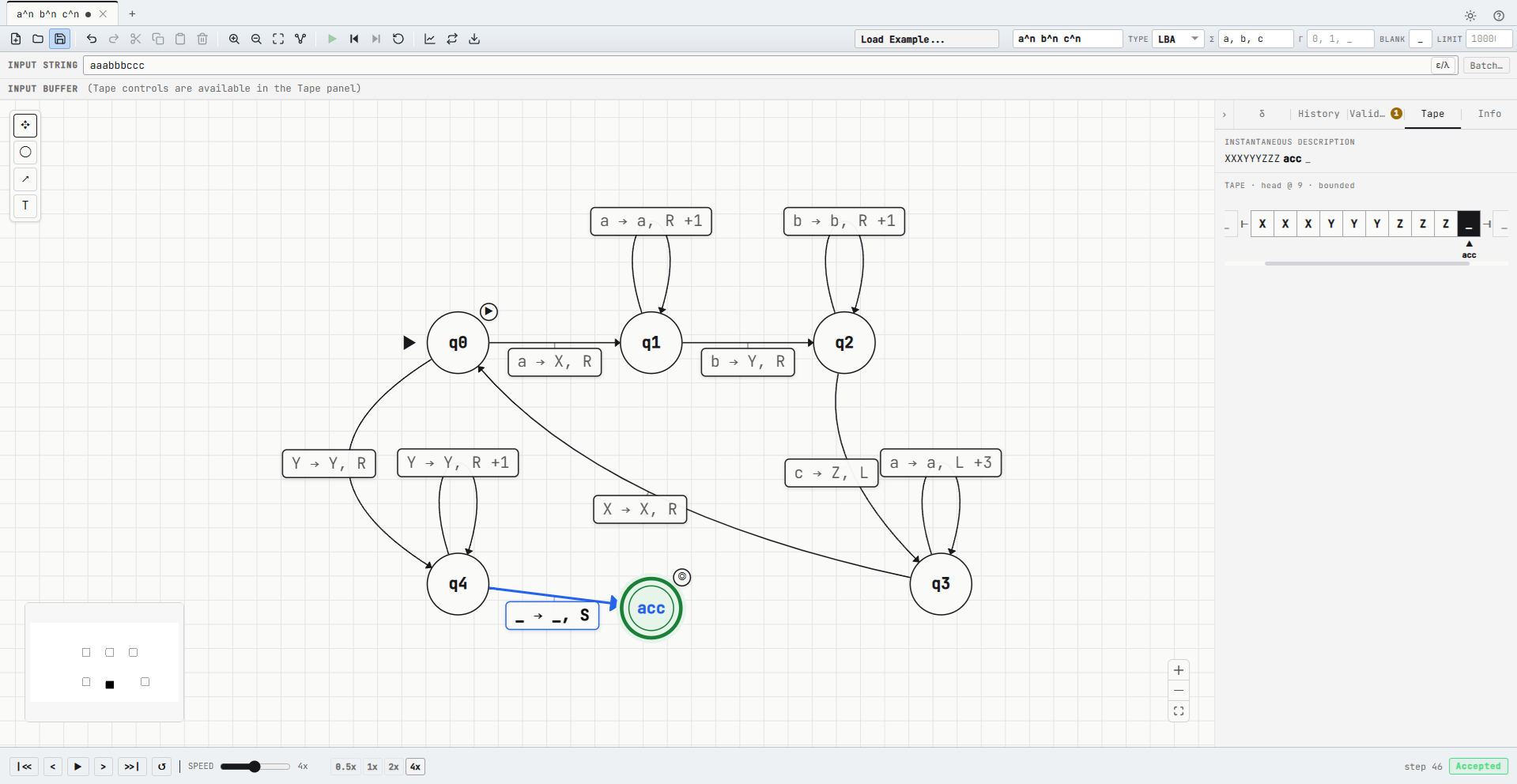
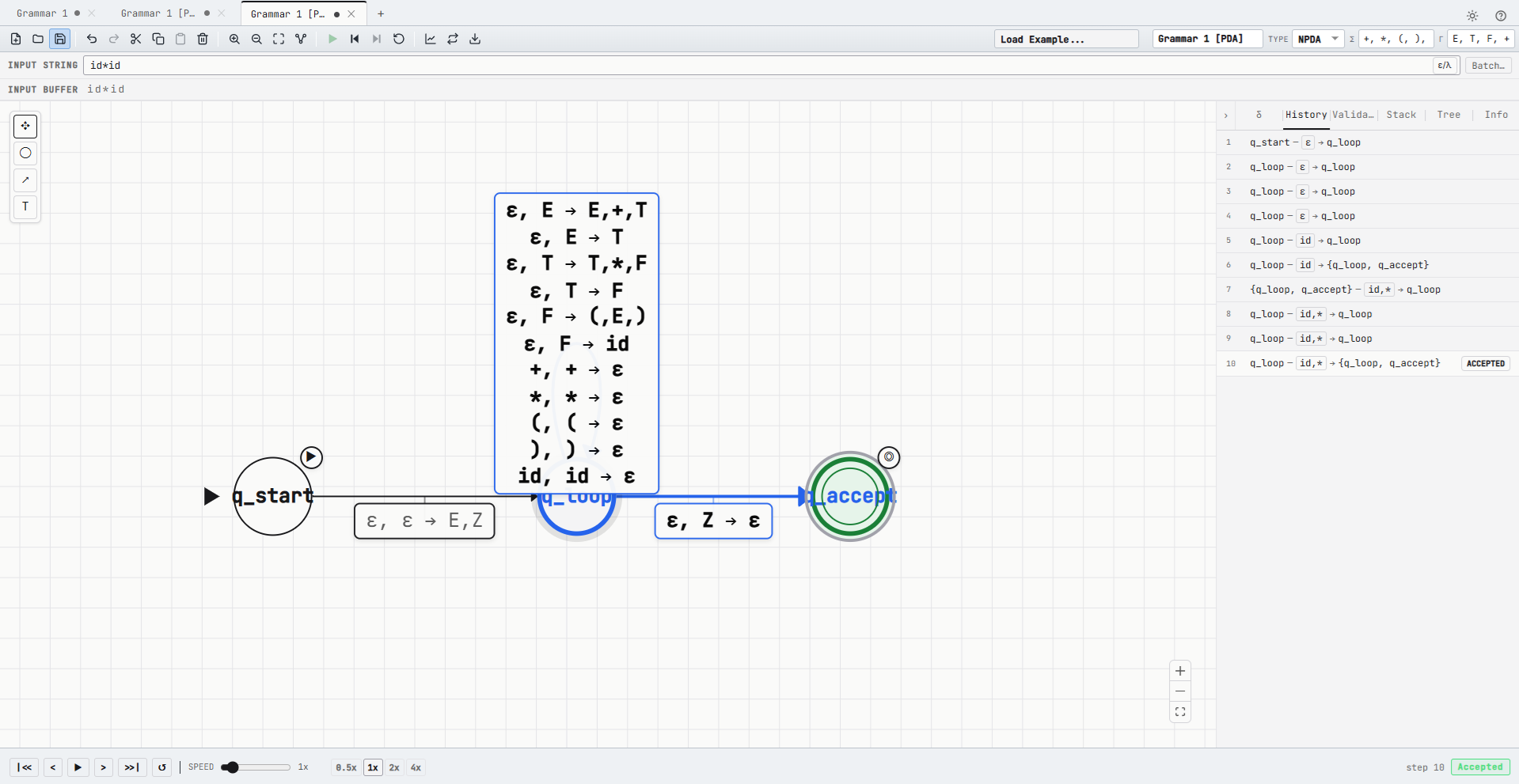
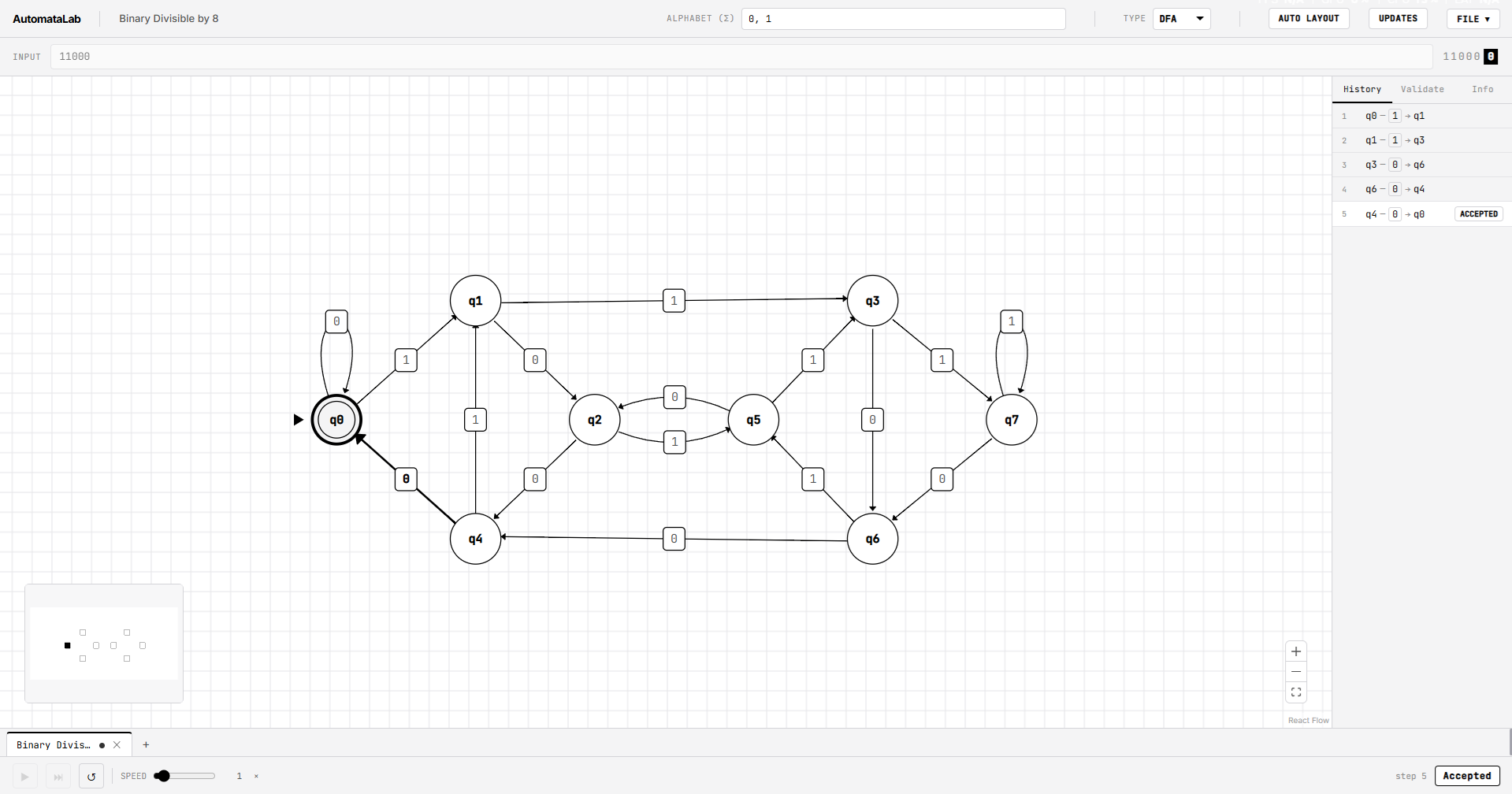
Machine Workspace
- • Visual simulation for DFA, NFA, ε-NFA, DPDA, NPDA, Turing Machines, and Linear Bounded Automata.
- • Features stack visualization, tape visualization, computation trees, step execution, and state inspection.
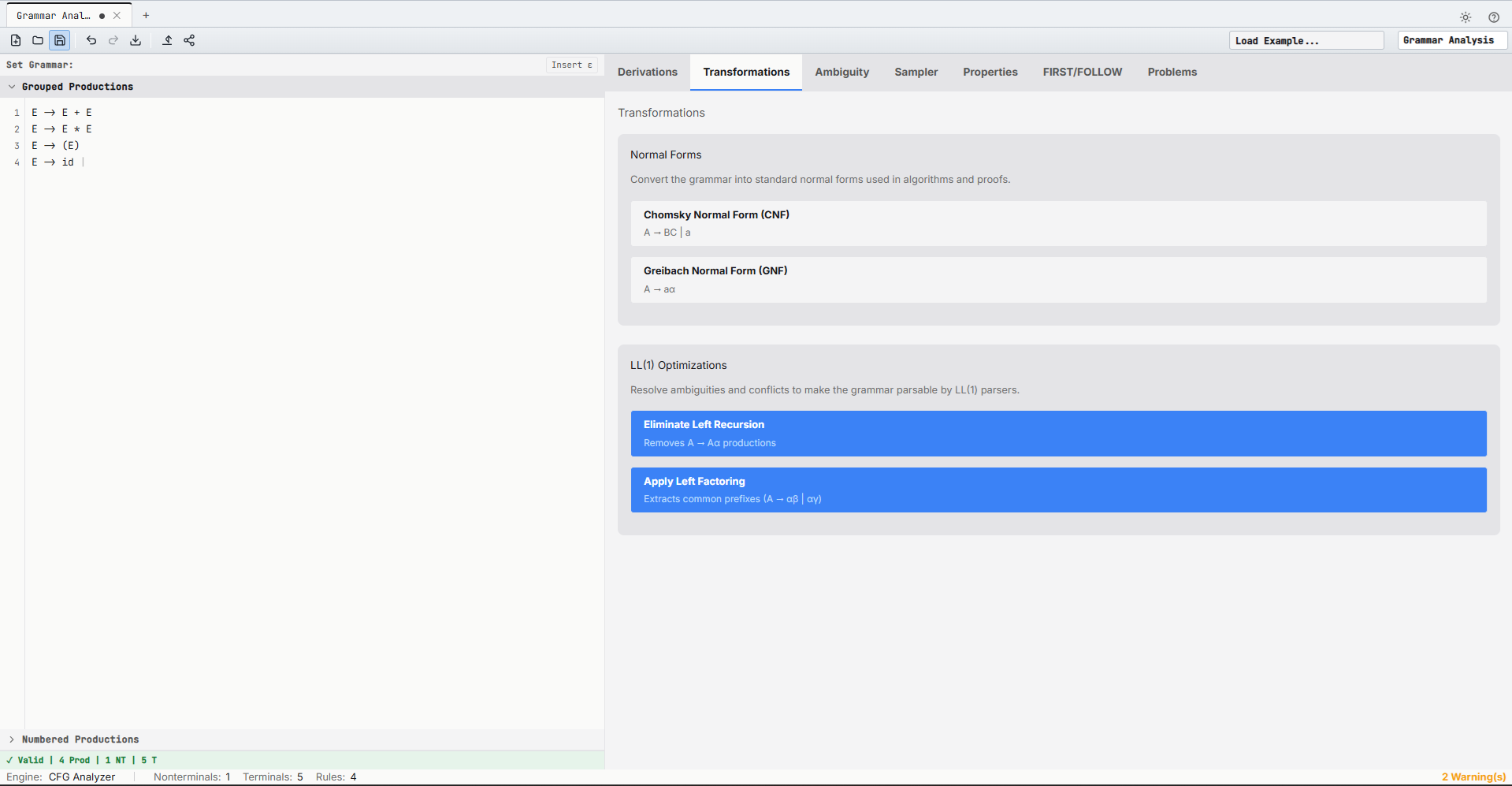
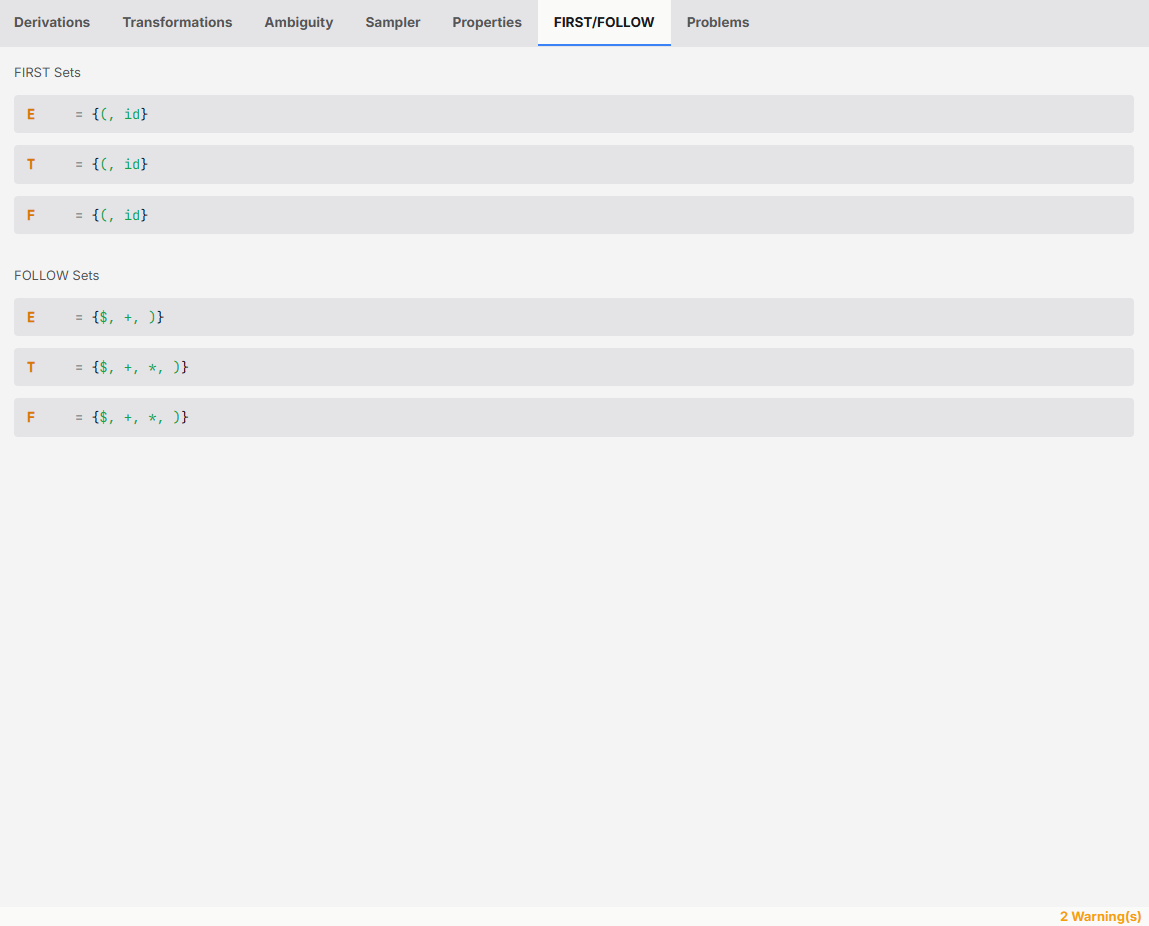
Grammar Lab
- • Comprehensive grammar analysis including FIRST/FOLLOW sets and Nullable analysis.
- • CNF/GNF conversions, ambiguity analysis, derivations, and grammar diagnostics.
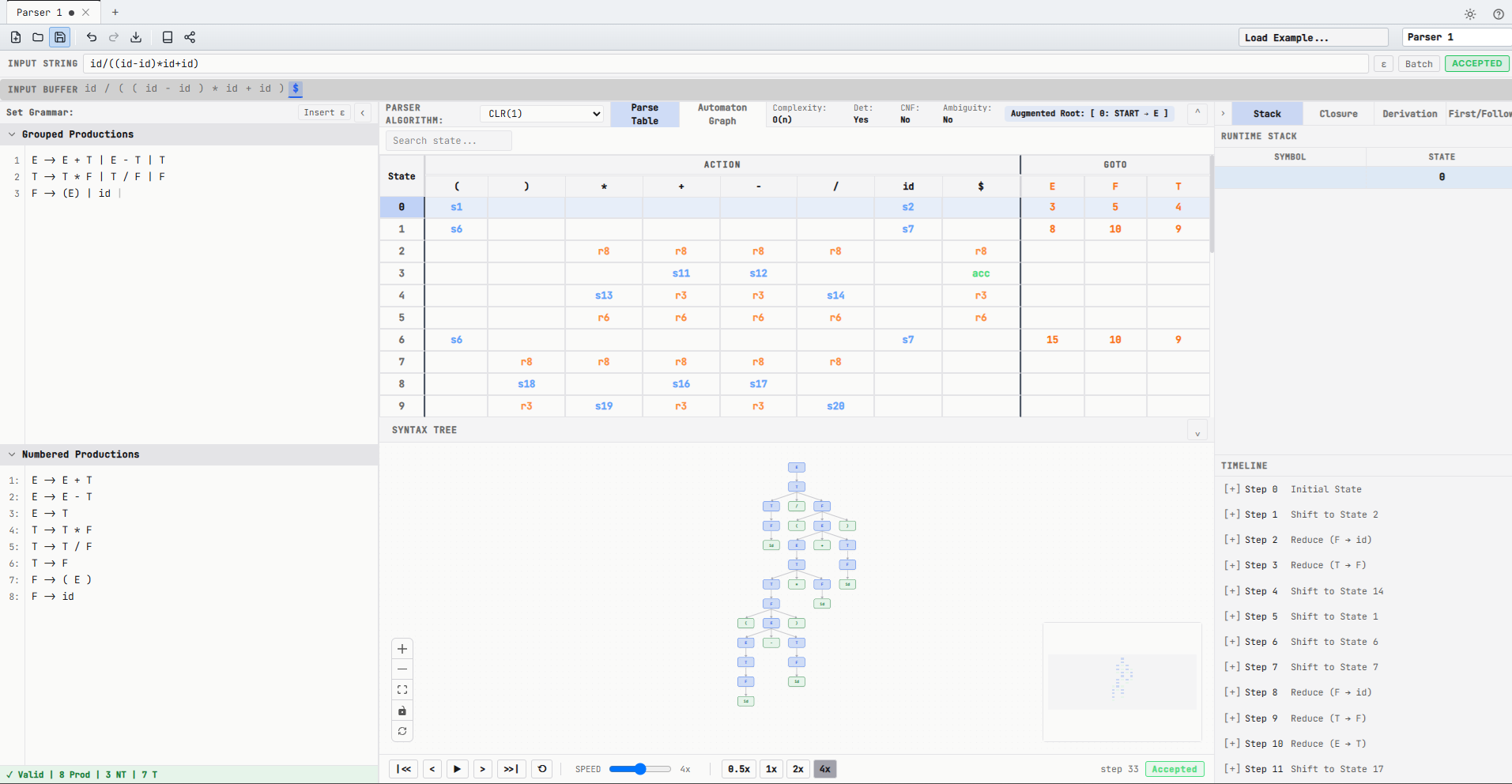
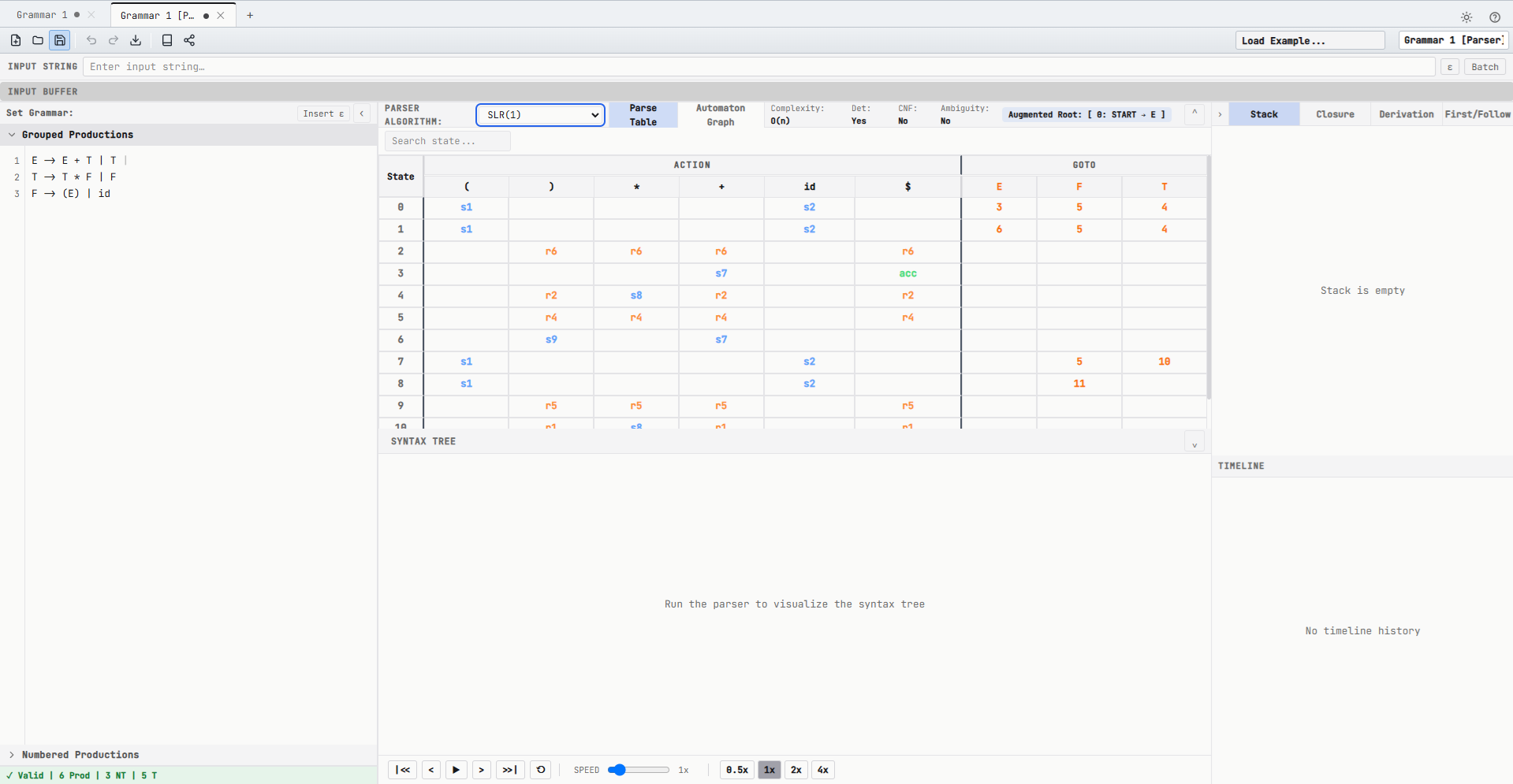
Parser Studio
- • Construct and debug parsers with support for CYK, Earley, CLR(1), and LALR(1).
- • View Parse Tables, Closure/GOTO sets, detect conflicts, and generate Parse Trees.
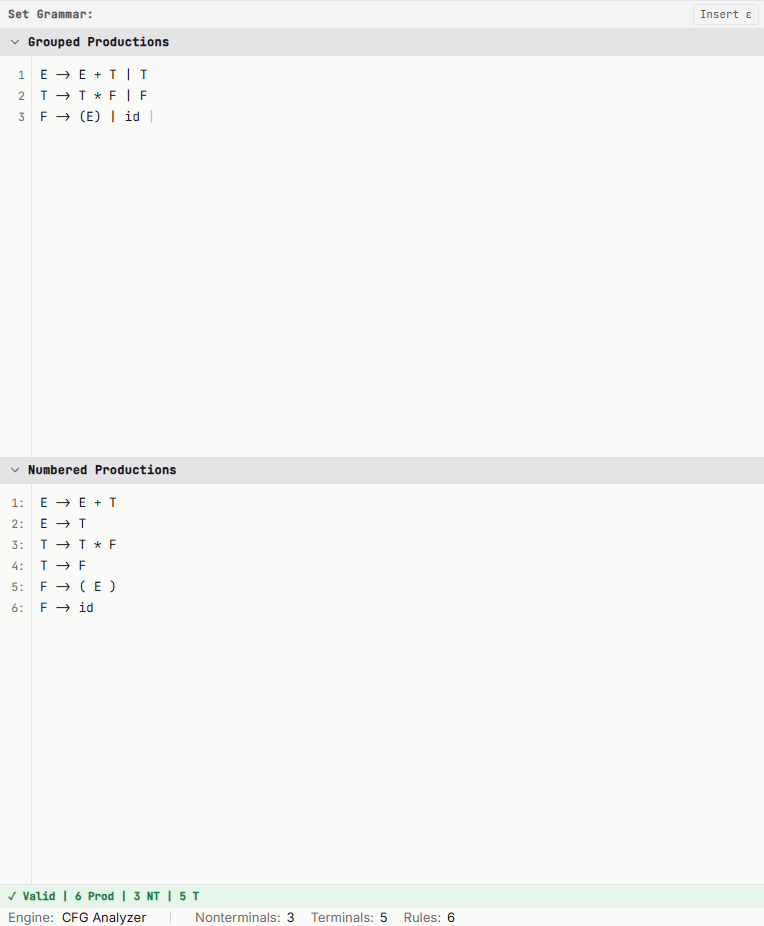
Move Seamlessly Between Formal Language Workflows
AutoMataLab's strongest differentiator is the ability to bridge theory boundaries.
Live Web Demo
Algorithms Supported
Automata Algorithms
- • Subset Construction
- • DFA Minimization
- • ε Removal
- • Regex → NFA
- • DFA → Regex
- • Reachability Analysis
- • Dead State Detection
Grammar Algorithms
- • FIRST
- • FOLLOW
- • Nullable
- • CNF
- • GNF
- • Left Recursion Detection
- • Ambiguity Detection
Parser Algorithms
- • CYK
- • Earley
- • CLR(1)
- • LALR(1)
- • Closure Generation
- • GOTO Construction
- • Conflict Detection
Conversion Algorithms
- • NFA → DFA
- • ε-NFA → NFA
- • DFA Minimization
- • DFA → Regex
- • Regex → NFA
- • CFG → CNF
- • CFG → GNF
- • CFG → PDA
Educational Applications
Targeted tooling for students, educators, and CS curriculum.
Theory of Computation
- • DFA
- • PDA
- • Turing Machines
Compiler Design
- • FIRST/FOLLOW
- • LR Parsing
- • Conflict Analysis
GATE CS Preparation
- • Formal Languages
- • Parsing
- • Automata
Documentation
Deep dive into the architecture and API of AutomataLab.
User Documentation
Grammar Lab Guide
FIRST/FOLLOW analysis, conversions, ambiguity detection, and diagnostics.
Read Guide →Developer Documentation
Architecture Reference
Internal architecture, state management, and application design.
Read Architecture Docs →File Format Specification
Project structure, serialization format, and compatibility guarantees.
Read Format Spec →Contribution Guide
Development workflow, standards, and contribution process.
Read Contributing Guide →GitHub Wiki
Community-maintained documentation, tutorials, examples, troubleshooting guides, and project knowledge base.
Read Wiki →Academic Use
If you use AutomataLab in your research, teaching, or publications, please cite it as follows:
@software{sinha2026automatalab,
  author = {Sinha, Reeshav},
  title = {{AutoMataLab}: An Integrated Environment for Automata, Grammars and Parser Construction},
  year = {2026},
  url = {https://github.com/reeshavsinha/AutomataLab}
}
Get AutomataLab
Runs completely offline. No telemetry. No cloud services. No account required.